Land Ownership for Women: The Importance of Economic Empowerment

The Open Society Institute released a brief titled “Securing Women’s Land and Property Rights: A Critical Step to Address HIV, Violence and Food Security.” The brief examines the way in which women’s property and land rights can enable women to have greater autonomy, greater control over their relationships, and improve their ability to provide food for themselves and their families. It summarizes the work of several organizations on this very important issue, and then provides some recommendations. Please read it, even if you’re not particularly concerned with the fate of women in other countries. Autonomy, economic empowerment and ownership matter everywhere.

In many parts of the world, women have fewer rights of ownership than men, are subjected to discriminatory attitudes and practices, and even if they have declared rights, securing them can be difficult if not impossible. Since land resources are highly contested in many places, large-scale land acquisitions often removes women farmers from their land. Citing several reports, the brief points out that women who are unable to maintain their autonomy through ownership are economically disempowered. These women are also at greater risk for HIV, AIDS, and abusive relationships. Intimate partner violence is an important part of this story. Being able to own land provides women with the ability to control their own housing and food, while also allowing them to maintain independence from their husbands and fathers. Taken together, property and land ownership can not only allow women to avoid situations in which they may be subjected to violence and put them at risk of contracting HIV or AIDS, it also provides them with a greater ability to cope with disease and violence when it does occur. 

In many ways we should not be surprised that economic empowerment is tied to ownership and property, and that health and food security are connected to both. But what is important here is to recognize that ownership is not an option for women in many places in the world. And in some places, the idea of women owning much of anything (let alone enough land to grow food for both their families and to sell for profit) is a radical concept. We sometimes take it for granted in the US, but we should not. Even here there are places where ownership is difficult for women, and women farmers face many obstacles in the form of discriminatory practices and local customs in their communities that make it difficult for them to farm successfully. But if we take seriously the idea that autonomy and the ability to decide for yourself what you want to do is fundamental to humanity, then it is also important to understand that one of the most basic rights we can grant people to help themselves is the ability to own land and produce food from it. Along with the right, however, has to come the practices that allow women to exercise ownership. That can be difficult all over the world.
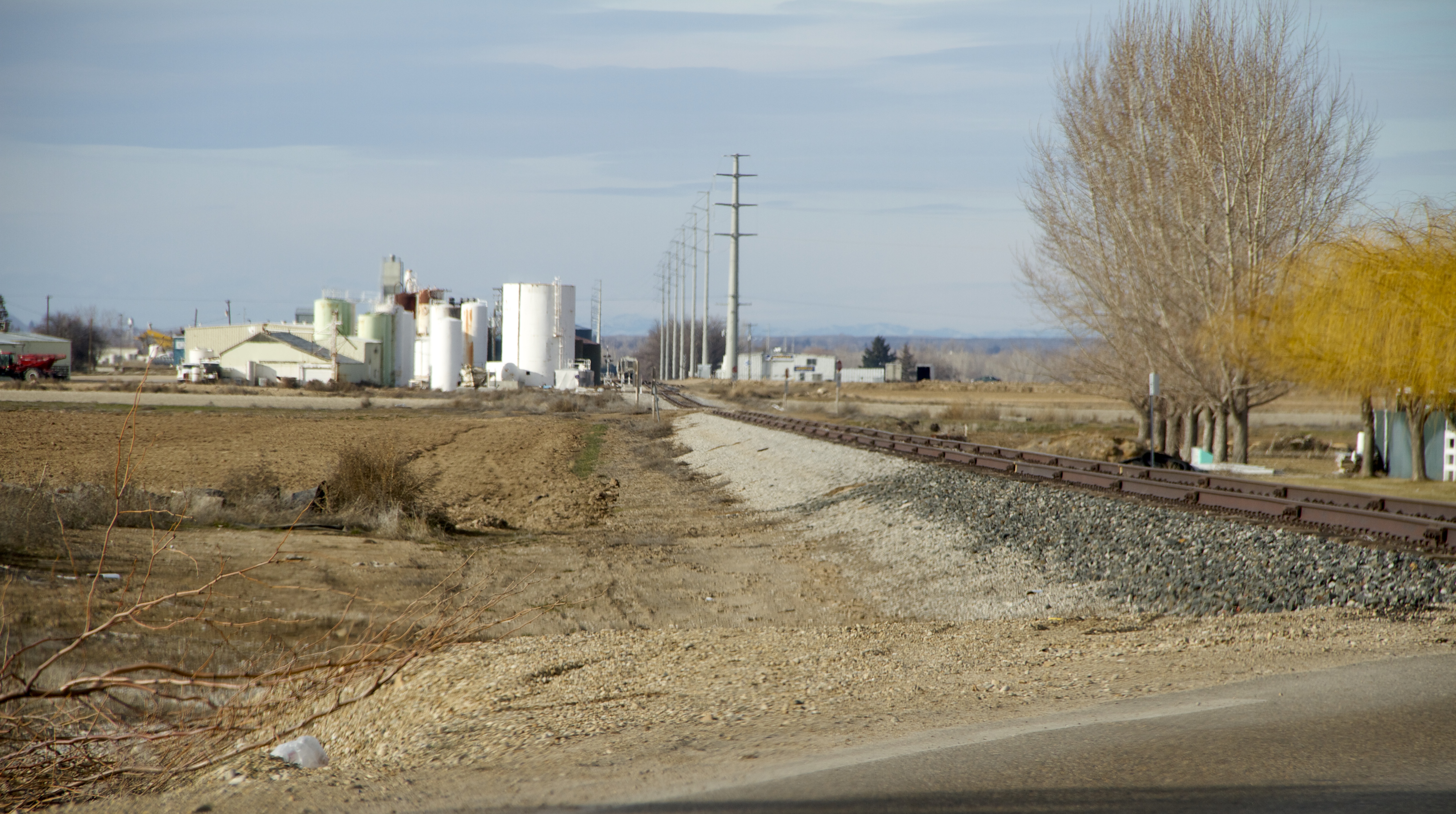
Brandt: Sometimes An Easement Is Just An Easement

IMG_1507

In an 8 to 1 decision this morning, the US Supreme Court decided that the government has no reversionary interest in the right of way at issue in Brandt Revocable Trust v. US. The slip opinion can be found at the Supreme Court website, and of course, a summary of the issues in the case are up at Oyez as well as the Scotusblog. The case is a major victory for property rights advocates. 

As I mentioned in my previous summary of the case, Brandt contended that the right of way granted in an Act in 1875 was an easement, and that once the railroad abandoned their tracks, the underlying land became unburdened by the easement. The Government contended that the right of way granted in the 1875 Act was more than an easement, and reserved “an implied reversionary interest” to the United States in the event that the land, granted to the railroad, was needed in the future. In the opinion for the Court, Chief Justice Roberts points out that the Government lost their case this time largely because they had, in 1942, argued the opposite of their position and had set a precedent that governed the current situation. In Great Northern Railway Co. v. US (315 US 262, 1942) the Government convinced the Court that the 1875 Act granted only an easement. What happens to an easement when it is abandoned, said today’s Court, is well settled in property law: “the easement disappears, and the landowner resumes his full and unencumbered interest in the land” (Majority Opinion, p. 11).

Chief Justice Roberts ends his decision pointing out that the Government’s argument represented a “stark change of position” and then suggests that the importance of settled expectations of the owners of private property motivates at least some of the majority’s thinking today:

More than 70 years ago, the Government argued before this Court that a right of way granted under the 1875 Act was a simple easement. The Court was persuaded, and so ruled. Now the Government argues that such a right of way is tantamount to a limited fee with an implied reversionary interest. We decline to endorse such a stark change of position, especially given ‘the special need for certainty and predictability where land titles are concerned.’”  (Majority Opinion, p. 17)

The lone dissent was filed by Justice Sotomayor who reads Great Northern a little differently. She argues that there were cases in 1903 and 1915 that the Court failed to take into account but are an important part of the context in which Great Northern occurred, and that “in the context of railroad rights of way, traditional property terms like ‘fee’ and ‘easement’ do not neatly track common-law definition.” In fact, she says, if you look at the past understandings of railway lands more broadly, it becomes clear that the Court’s interpretation of Great Northern applies an understanding of easement that developed in a dispute in which the question was quite specific and very different from what is presented in Brandt, i.e., whether the right of way granted in the 1875 act allowed the grantee the right to mine for subsurface minerals (oil, in this case). The Great Northern court said no, that the only right conveyed in the act was a right to use the surface of the land because the right of way was an easement. That finding, Justice Sotomayor says, is about a very different issue than whether the right of way granted a reversionary interest, which, of course, is the issue raised in Brandt. Justice Sotomayor also argues that, with regard to land grants for the railroads such as the one created in the 1875 legislation, ambiguity “is to be resolved favorably to a sovereign grantor.” This principle, she says, also comes out of Great Northern.

Her final point goes to the impact the decision will have on contemporary public policy. Justice Sotomayor points out that the decision made today “undermines the legality of thousands of miles of former rights of way that the public now enjoys as means of transportation and recreation. And lawsuits challenging the conversion of former rails to recreational trails alone may well cost American taxpayers hundreds of millions of dollars. I do not believe the law requires this result…” (Dissent, p. 7).

Both Justice Sotomayor and Chief Justice Roberts are correct: this decision should stabilize property title in situations where abandoned railroad tracks cross private property and an easement was granted through the 1875 Act; it will also mean that in those cases, land will have to be purchased, or a new easements will have to be sought for recreational trails through these areas. More litigation may well occur as a result.

For me, I continue to be interested in what all this means for the nature of an easement or a right of way granted through federal legislation. What I am wondering is whether this case suggests that easements and right of ways will be judged according to the specific intent and the extent of the servitude the legislation intended to place upon the land at the time the legislation was drafted. If, in subsequent decades, the federal government interprets the servitude differently from how it was understood at the time of enactment, will such a new interpretation be understood as an over-reach that tries to grant more of a right of way (i.e., a broader right to use) than was intended by the framers of the law? I think this Court will be open to taking a closer look at situations that raise that particular question.